
LAPLAND ACTIVITY
Ice Skating in Lapland
-
OUTDOOR ACTIVITY
Move Through Nature
-
FAMILY FRIENDLY
Suitable for all ages
-
ACTIVE EXPERIENCE
Light physical activity
EXPERIENCE
A Peaceful Winter Moment On Natural Ice
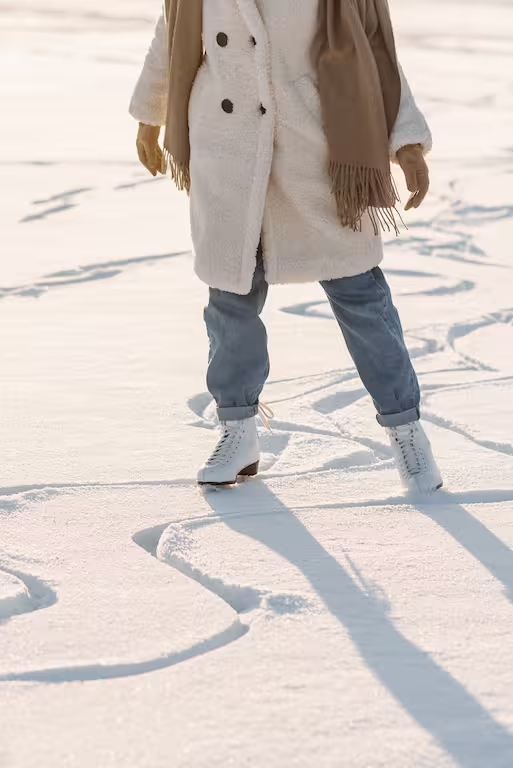
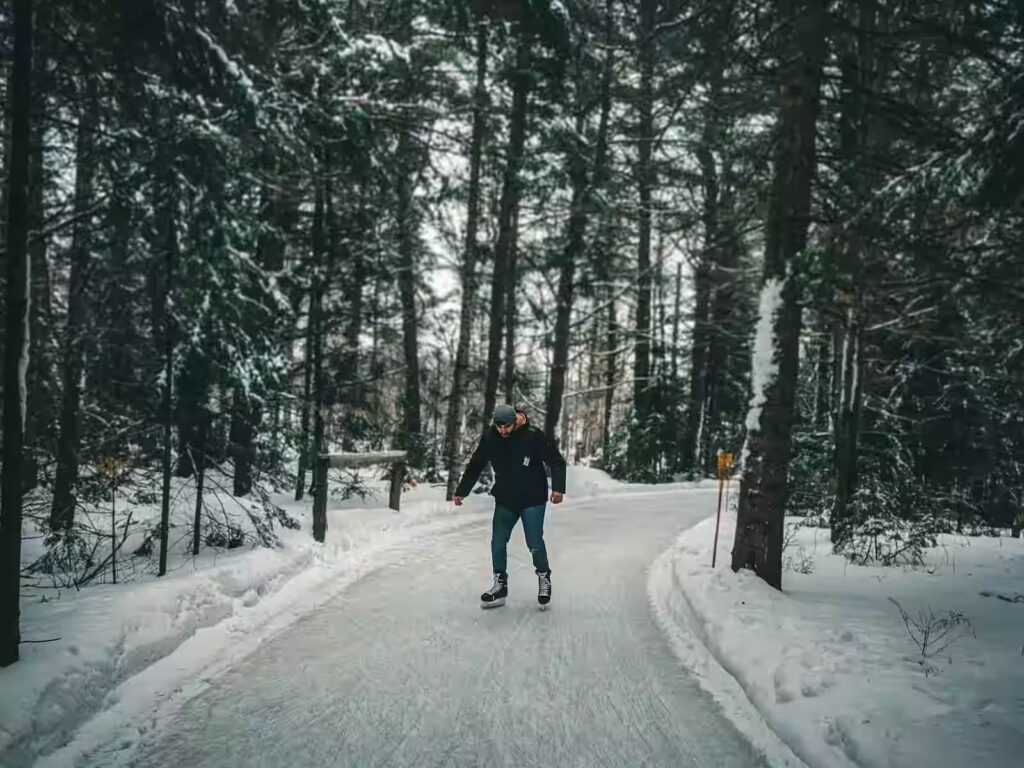
Skating here is not just about movement. It is the quiet sound of blades touching natural ice, the fresh winter air on your face, and the wide frozen landscapes stretching around you. On a frozen lake, the world feels open, peaceful and still. Along a forest track, the experience becomes more atmospheric, with snow-covered trees surrounding you as you follow the winding path through the winter scenery.
As the skates begin to carry you forward, the motion feels light and smooth, almost like dancing on ice. You can take it slowly and enjoy the silence, or pick up speed and feel the freedom of moving across the frozen surface. The experience follows your own rhythm.
Whether it is your first time on skates or a return to the ice, skating in Lapland offers a memorable way to connect with winter nature. It combines movement, calmness, fresh air and the special feeling of gliding through one of the most beautiful winter landscapes in the North.
GOOD TO KNOW
Good to know
Ice skating in Lapland can take place on frozen lakes or specially prepared forest tracks, depending on the location and conditions. Beginners are welcome, and guidance is available to help you learn the basics and feel more confident on the ice.
For families
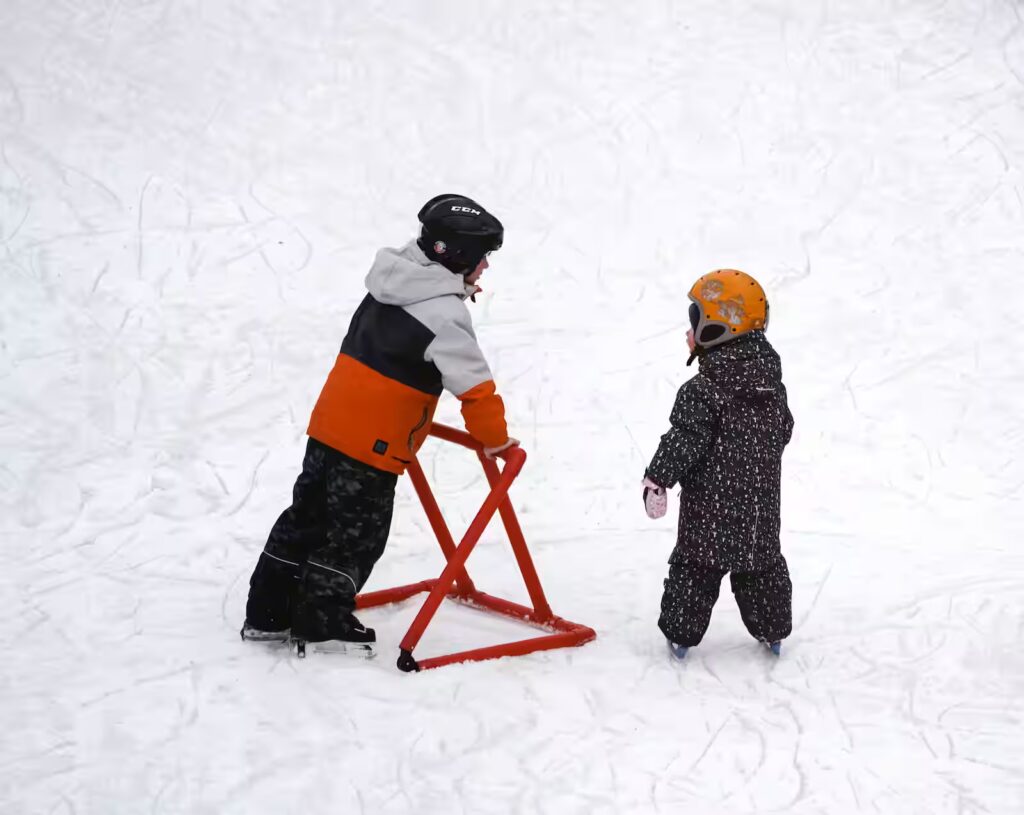
Ice skating can be a fun and memorable winter activity for families. Children and adults can enjoy the experience at their own pace, whether skating slowly together or practicing balance on the ice.
Helmets are recommended, especially for children and beginners. Families should choose a pace that feels safe and comfortable for everyone.
Requirements
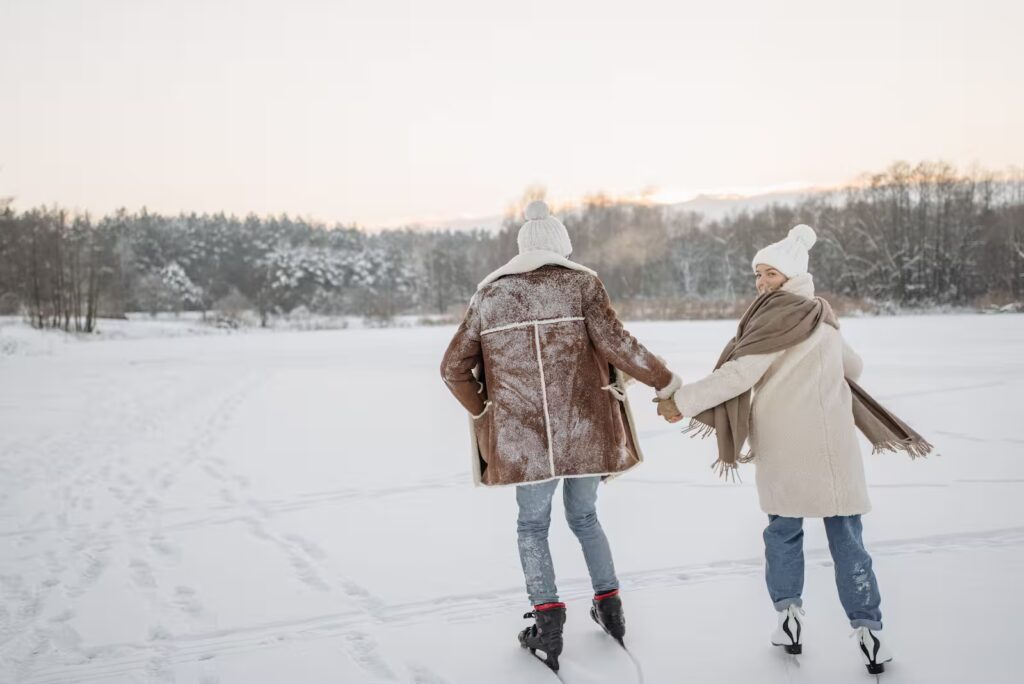
Ice skating requires basic balance, coordination and the ability to move independently on the ice. No previous skating experience is required, but beginners should be prepared for a short learning period.
Because falling is possible, this activity may not be suitable for guests with a higher risk of injury, such as those with previous hip injuries, serious balance issues or other physical limitations. Guests should consider their own physical condition before joining.
Equipment & Guidance
Skates and helmets are available for rent, making it easy to try the activity without bringing your own gear. Guides can provide instructions, safety tips and support for beginners, helping you get started and enjoy the experience with more confidence.
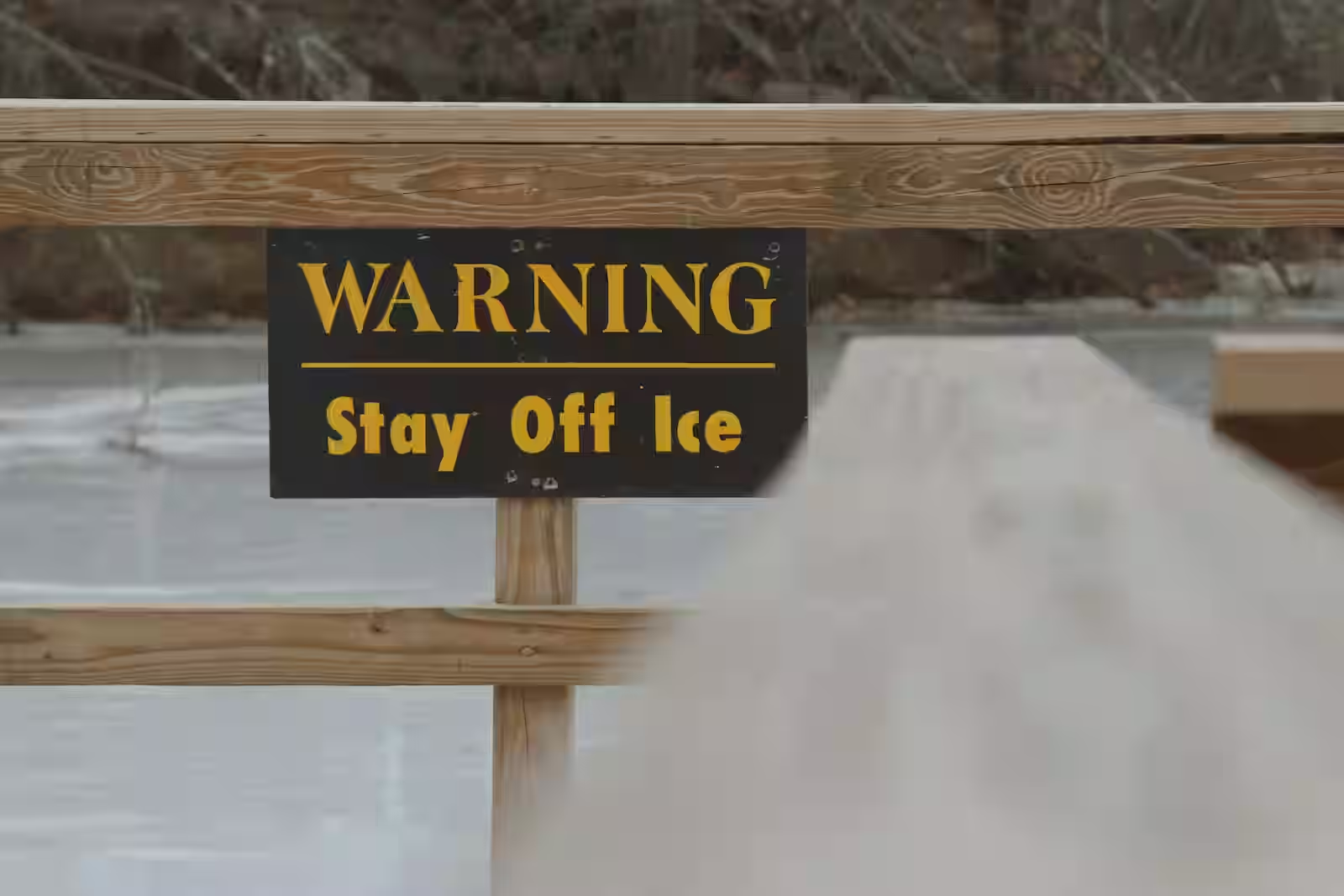
When skating on frozen lakes or rivers, it is very important to know the current ice conditions before going onto the ice. Natural ice can vary depending on temperature, currents, snow cover and recent weather changes. If you are skating independently and do not know the ice situation, it is always safer to stay on maintained skating rinks or officially approved skating areas.
QUESTIONS
Frequently Asked Questions
Do I need previous skating experience?
No. Previous skating experience is not required. Beginners can join, and guides can provide basic instructions, safety tips and support. Skating may feel challenging at first because it requires balance and coordination, but with a little practice it usually becomes more natural.
Ice skating may not be suitable for guests with a higher risk of injury, such as previous hip injuries, serious balance problems or physical conditions that make falling more dangerous.
Can I rent skates and a helmet?
Yes. Skates and helmets are available for rent, so you do not need to bring your own equipment.
Is ice skating suitable for children?
Yes, ice skating can be suitable for children, especially when they use proper safety equipment such as helmets. Children should skate at a safe pace and be supervised by adults.
Where does the skating take place?
The experience may take place on maintained skating rinks, a frozen lake with open views, or a winding forest track surrounded by snow-covered trees, depending on the location, weather and ice conditions.
Is ice skating physically demanding?
Ice skating requires balance and coordination, but you can choose your own pace. You can skate slowly and calmly or move faster if you feel more confident on the ice.
What should I know about natural ice safety?
When skating on frozen lakes or rivers, it is very important to know the current ice conditions before going onto the ice. Natural ice can change depending on temperature, currents, snow cover and recent weather.
If you are skating independently and do not know the ice situation, it is always safer to stay on maintained skating rinks or officially approved skating areas.
QUESTIONS
Frequently Asked Questions
Do I need previous skating experience?
No. Previous skating experience is not required. Beginners can join, and guides can provide basic instructions, safety tips and support. Skating may feel challenging at first because it requires balance and coordination, but with a little practice it usually becomes more natural.
Ice skating may not be suitable for guests with a higher risk of injury, such as previous hip injuries, serious balance problems or physical conditions that make falling more dangerous.
Can I rent skates and a helmet?
Yes. Skates and helmets are available for rent, so you do not need to bring your own equipment.
Is ice skating suitable for children?
Yes, ice skating can be suitable for children, especially when they use proper safety equipment such as helmets. Children should skate at a safe pace and be supervised by adults.
Where does the skating take place?
The experience may take place on maintained skating rinks, a frozen lake with open views, or a winding forest track surrounded by snow-covered trees, depending on the location, weather and ice conditions.
Is ice skating physically demanding?
Ice skating requires balance and coordination, but you can choose your own pace. You can skate slowly and calmly or move faster if you feel more confident on the ice.
What should I know about natural ice safety?
When skating on frozen lakes or rivers, it is very important to know the current ice conditions before going onto the ice. Natural ice can change depending on temperature, currents, snow cover and recent weather.
If you are skating independently and do not know the ice situation, it is always safer to stay on maintained skating rinks or officially approved skating areas.